

Demystifying Health Insurance Coverage in Thailand
Last updated: 29 Jul 2024 • 2,895 Views • Policy Guide
Navigating medical policies can often feel complex, but mastering your health insurance coverage in Thailand is essential for protecting your health and financial future. Fully regulated under the Office of Insurance Commission (OIC), understanding inpatient limits, outpatient add-ons, policy exclusions, and direct billing terms ensures you maximize your policy benefits across Thailand's private hospital network.
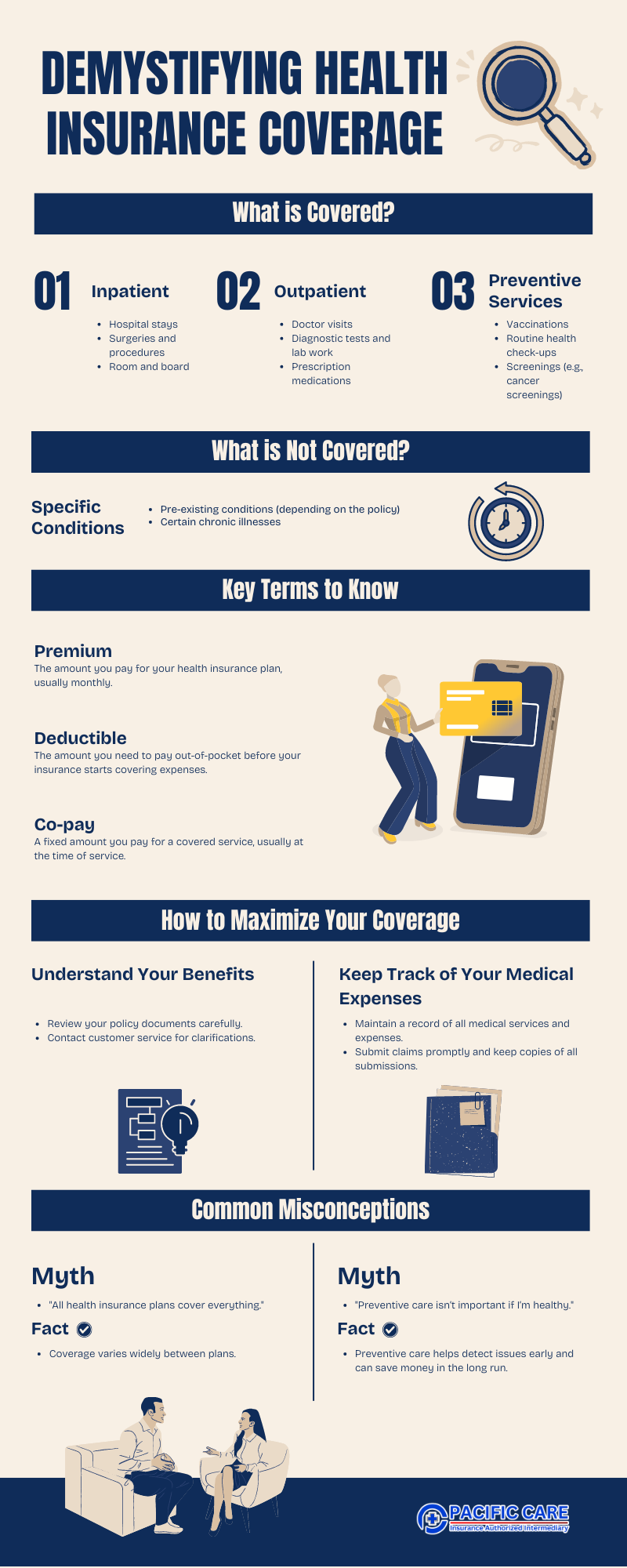
1. Core Components of Health Insurance Coverage
Comprehensive medical policies in Thailand generally encompass three primary clinical tiers:
Inpatient Hospital Care (IPD)
- Hospital Room & Board: Daily allowances for standard single private rooms, nursing care, and intensive care units (ICU).
- Surgical & Operating Theater: Covers surgeon fees, specialist consultations, anesthesiology, and recovery equipment.
- Emergency Surgeries: Direct cashless coverage for accidental trauma, appendectomy, and acute medical conditions.
Outpatient Clinic Services (OPD)
- General Doctor Consultations: Appointments with general practitioners and medical specialists without hospital admission.
- Diagnostic Laboratory Work: Blood diagnostics, digital X-rays, CT scans, and advanced MRI imaging.
- Prescription Drugs: Prescribed medications directly dispensed through accredited hospital pharmacies.
Preventive Wellness & Critical Illness
- Routine Health Screenings: Annual executive physical exams, cardiovascular checks, and cholesterol testing.
- Immunizations & Vaccines: Preventive flu jabs, tetanus boosters, and tropical disease immunizations.
- Advanced Cancer Therapies: Outpatient chemotherapy, radiotherapy, and targeted targeted oncology care.
2. Common Policy Exclusions in Thailand
Knowing standard exclusions prevents unexpected claim rejections during hospital checkouts:
General Exclusions
- Cosmetic & Aesthetic Procedures: Elective plastic surgery, cosmetic dermatology, or non-medical enhancements.
- Experimental Therapies: Unproven or non-standard clinical medical trials.
- Substance-Related Incidents: Injuries sustained while intoxicated beyond legal driving limits.
Pre-Existing & Congenital Conditions
- Pre-Existing Medical Conditions: Medical issues existing prior to policy inception (unless underwritten with specific acceptance).
- Congenital Anomalies: Hereditary or birth defects, unless specialized riders are explicitly attached.
3. Essential Health Insurance Terminology
Familiarize yourself with these universal insurance terms when evaluating schedules:
- Premium: The agreed annual or monthly fee paid to keep your health insurance policy active.
- Deductible: The initial out-of-pocket amount you must settle before the insurance carrier begins paying claims.
- Co-Payment (Co-Pay): A fixed nominal fee (e.g., 500 Baht) paid per clinic visit.
- Co-Insurance: The percentage split of costs (e.g., 80/20) shared between the insurer and policyholder after reaching the deductible.
- Out-of-Pocket Maximum: The maximum financial cap you will pay in a policy year, after which the insurer pays 100% of covered treatments.
4. How to Maximize Your Health Insurance Benefits in Thailand
To ensure optimal medical care while keeping out-of-pocket expenses minimal, adopt these proven management strategies:
Utilize In-Network Private Hospitals
Partner medical centers offer direct cashless check-in and checkout services, eliminating upfront cash deposits.
Pre-Authorize Non-Emergency Surgeries
Submit medical assessment reports 5–7 business days ahead to guarantee full coverage confirmation prior to admission.
Accumulate No-Claims Discounts (NCD)
Preserve continuous claim-free renewal years to unlock premium discounts of 10% to 25% across leading Thai insurers.
5. Common Misconceptions About Health Insurance in Thailand
Myth: "All private hospital insurance policies cover unlimited room rates."
Fact: Policies set specific daily room & board allowances. Exceeding your plan limit requires settling the difference at discharge.
Myth: "Insurance begins covering chronic illnesses immediately on day one."
Fact: Standard policies enforce waiting periods (30 days for general illnesses, 90–120 days for tumors, hernias, and cysts).
Conclusion
Demystifying your health insurance coverage in Thailand allows you to select policy terms that match your actual healthcare needs and budget. By knowing your inpatient limits, recognizing exclusions, and consulting with independent brokers, you can enjoy life in Thailand with complete medical confidence.
Take Control of Your Healthcare in Thailand Today
Find a health insurance plan tailored to your lifestyle, visa status, and budget with Pacific Care.
Get a Free Consultation